Listen to the Blog Post
For many homeowners in the northwest suburbs of Chicago, the question feels different in 2026 than it did just a few years ago.
It used to be fairly simple: Should we move or remodel? Today, the decision is multi-layered.
Your children grew up here. Your parents may live a few exits north on I-90. You value your school district, your neighbors, and the rhythm of daily life.
At the same time, your current house may no longer function the way your family needs it to.
Now add another reality: historically low mortgage rates that many homeowners secured in the early 2020s. Walking away from your current mortgage rate is not a small decision. And finding another home in the same district, within the same few streets, is often far more competitive and expensive than it appears.
So the question becomes more nuanced: Do we move and take on a significantly higher rate for a home that may still need updates? Or do we invest in this one and shape it around the life we are building now?
For more than 30 years, families have come to us standing at this exact crossroads.
Here is how we help them think it through:
Table of Contents
2. Understand the Financial Landscape
3. Evaluate What Cannot Be Changed
4. Decide With a Long-Term Lens
5. When We Tell Homeowners to Move
Clarify What You Want
Before discussing interest rates, equity, or resale value, start somewhere quieter.
Start With Clarity, Not Cost
The decision to move or pursue home remodeling rarely starts with numbers. It starts with friction.
A moment in the kitchen when it feels too tight.
A morning when everyone is trying to get out the door at once.
An evening when there is nowhere comfortable to gather.
Over time, especially with a growing family, patterns begin to surface. The home that once felt spacious now feels crowded. Rooms that worked for toddlers do not work for teenagers. A formal dining room sits unused while the kitchen overflows. Remote work has become permanent, but there is no dedicated space for it.
And sometimes it is not about space at all. Sometimes the home simply no longer reflects who you are or how you live.
This is usually the moment when it helps to pause and picture what would actually change your day-to-day experience.
- It might be a first floor that feels connected instead of segmented.
- A kitchen that finally supports how you cook and gather with a flow that avoids the “traffic jams.”
- A private primary suite on the first floor that allows you to live independently for as long as possible.
- Or a layout reconfiguration that creates an easy flow to the backyard, keeping you visually connected to your children while you stay productive inside.
When we sit down with homeowners, we are not just looking at walls and square footage. We are looking at how the home both supports and limits the life within it.
Some houses have far more potential than their owners realize. Others may not structurally support the changes being considered, but clarity always begins the same way: understanding what is truly missing.
Once that is clear, the financial and structural conversations become far more productive.
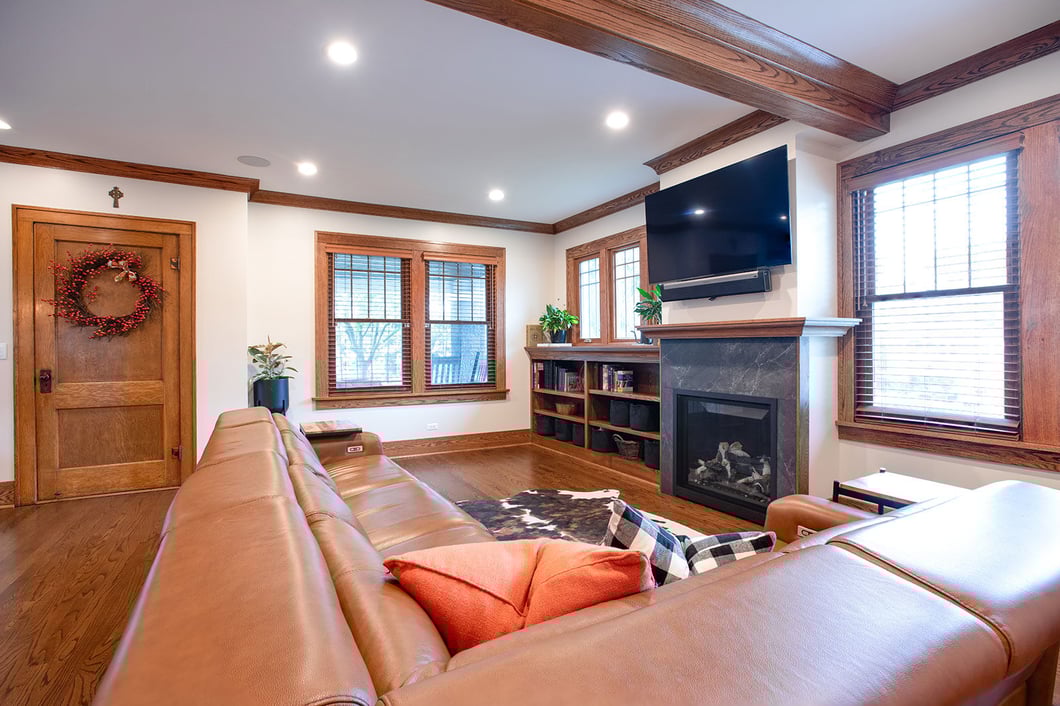 The Emotional Investment
There is always a financial equation, but there is also an emotional attachment that comes with long-term homeownership.
For example, we have worked with homeowners who bought a small Cape Cod over ten years ago, back when their family was just beginning. Their children were born in that home, and over time, they have grown to love not only the house but the huge lot, the friendly neighbors, and the quiet street tucked at the end of a cul-de-sac.
From a purely outside perspective, some might say, “I would have moved.”
Instead, they chose to double the size of their home with a two-story addition. The second floor was completely reconfigured. A new staircase was added to meet code. What was once a small layout has become a four-bedroom, two-bathroom upper level with a thoughtfully redesigned first floor.
The investment is significant, but so is the value they place on staying. And this is where the decision becomes deeply personal.
How much someone is willing to invest often reflects how strongly they value their neighborhood, school district, lot, and the emotional attachment tied to their current house.
No spreadsheet can fully quantify that.
 Understand the Financial Landscape
Once priorities are clear, the financial framework becomes easier to evaluate.
Protecting a Once-in-a-Generation Interest Rate
Many families locked in mortgage rates in the early 2020s between 2 and 3 percent. Rates that may not return for decades, if ever.
In 2026, the decision is often less about remodeling versus moving and more about this: Do we really want to give up that rate?
If you sell and purchase a comparable home today, you are likely:
- Paying significantly more for the same unrenovated house
- Taking on a much higher interest rate
- Increasing your monthly payment substantially
For many homeowners, that reality alone feels paralyzing. The assumption becomes: If we renovate, we would have to refinance and lose our rate.
But that is not necessarily true.
Renovating Does Not Always Mean Refinancing
One of the most common assumptions we hear is that renovating automatically means refinancing. For many homeowners who secured historically low mortgage rates, that idea alone can stop the conversation.
But renovation does not always require replacing your original mortgage.
In many cases, families can keep their existing low-rate first mortgage intact and access the equity they have built separately through a home equity loan or a second-position loan. The structure of the original loan remains untouched, and the renovation is financed independently.
When homeowners understand that distinction, the tone of the discussion changes. It shifts from “We cannot afford to lose our rate” to “How do we strategically use what we have already built?”
That shift opens up options that often feel out of reach at first glance.
Your remodel is an investment in how you live every day. Learn your finance options by reading the full guide.
Run the Numbers With Clear Eyes
Once the financing structure is understood, it becomes important to evaluate both paths without emotion clouding the math. Many families walk through a practical exercise:
- What is the home’s value today?
- How much equity is available?
- What would a comparable purchase truly cost after higher interest, taxes, and potential updates?
- What would we need to spend to make a new house truly ours?
Some families discover that moving requires substantially more capital, yet still involves compromise. Others realize that strategic home remodeling offers a stronger long-term return on investment when factoring in both financial and lifestyle outcomes.
This is where clarity replaces assumption.
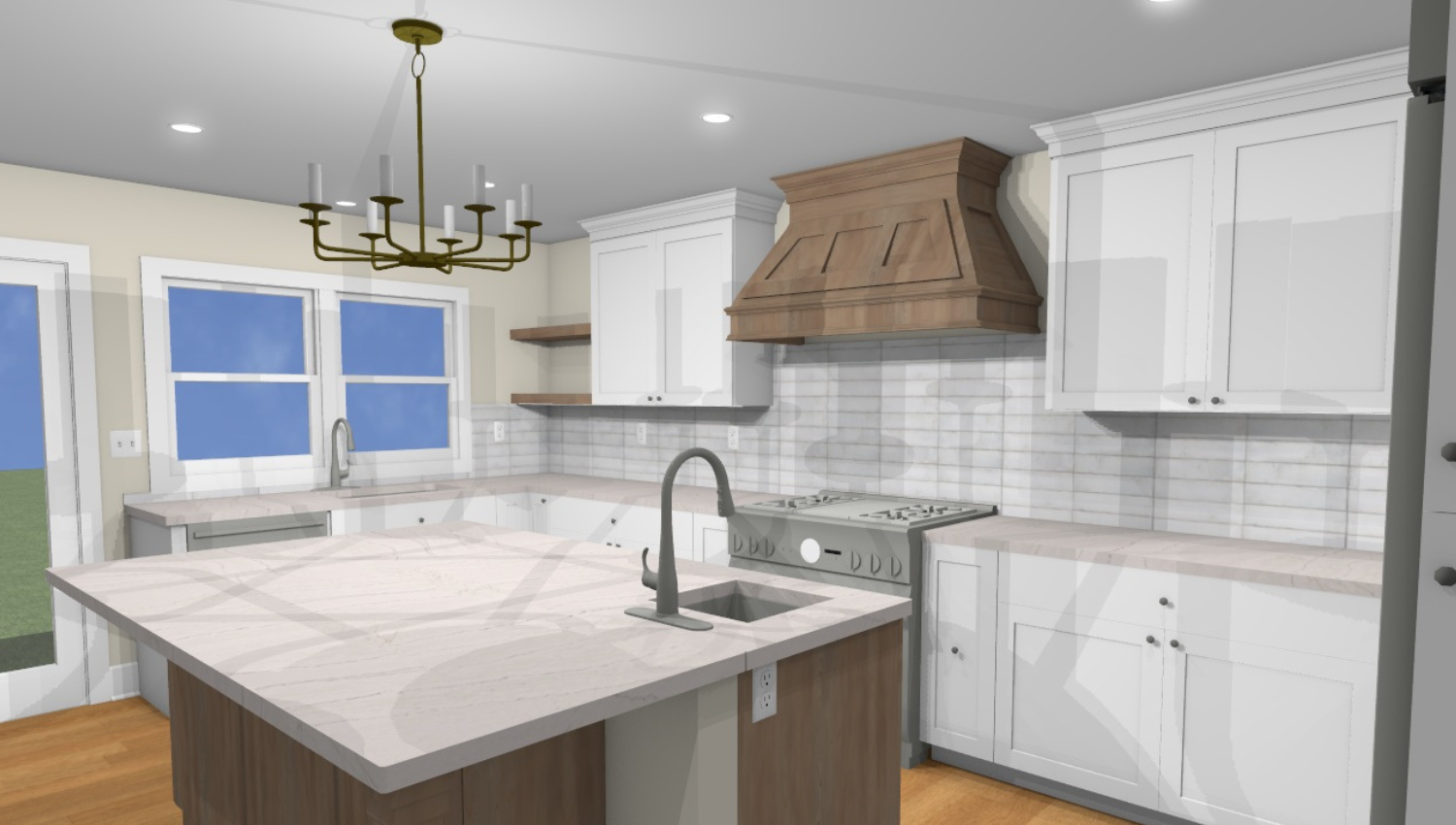
.gif?width=1500&height=850&name=fernandez%20kitchen%20before%20after%20gif%20(1500%20x%20850%20px).gif) This kitchen transformation is part of the larger S. Fernandez Whole-House Renovation, where thoughtful design, intentional layout changes, and enduring craftsmanship came together to completely reimagine the home.
This kitchen transformation is part of the larger S. Fernandez Whole-House Renovation, where thoughtful design, intentional layout changes, and enduring craftsmanship came together to completely reimagine the home.
Evaluate What Cannot Be Changed
Finances are adjustable. Location is not.
You Cannot Renovate a Zip Code
For many families, the neighborhood itself is often the most valuable asset.
School districts matter. Proximity to family matters. Commute times matter. So does the ability to stay put in a community that feels established and familiar.
When families decide they want to remain in the same district, on the same block, or within walking distance to schools and parks, the search radius becomes very small. Inventory is limited, and competition increases.
We regularly meet homeowners who spend a year or more looking for the next home within that tight boundary. After touring dozens of homes, they often come to a familiar realization:
- The layouts still do not function the way their family needs.
- The lots are smaller or less private than expected.
- Many of the homes require significant updates despite the price.
- And even within the same zip code, the location simply does not feel the same.
You can reconfigure a home. What you cannot replicate is the school your children love or the familiarity of a neighborhood that already feels like home.
The True Cost of Moving
There is another layer to this decision that many homeowners may not see at first.
On paper, buying a newly renovated home can look like the easier path: the finishes are fresh, the kitchen has recently been updated, and everything appears move-in ready.
But the reality is that the home was designed around someone else’s life. The kitchen was laid out for how they cooked. The rooms were arranged according to how they entertained. The finish materials were selected for their preferences, not yours. And while it may look updated, it may not function the way your family needs it to.
What often happens next is something we see repeatedly: after the boxes are unpacked and life settles in, the new homeowners begin noticing pain points. The kitchen island is not quite large enough. There isn’t enough storage. Your teenagers hesitate to invite friends over because there is no comfortable space for them to gather.
Eventually, renovation comes up again. Except this time, it follows selling costs, closing costs, moving expenses, and disruption. Moving to a new home does not always eliminate construction; instead, it merely postpones it.
Renovating your existing home allows every decision to reflect your routines, lifestyle, and long-term plans.
 Decide With a Long-Term Lens
With needs clarified, finances evaluated, and immovable factors considered, the final layer is perspective.
Think in Five-Year Increments
Another critical question is the timeline: How long do you plan to stay in this house?
A major whole-home renovation is rarely advisable if you anticipate selling within a few years. There is a difference between preparing a home for resale and investing in one you plan to live in long-term.
Designing with a long-term horizon reframes priorities. You evaluate durability, long-term flexibility, and whether the home will serve you as your needs evolve. Function and flow take precedence over cosmetic updates.
If your timeline is short, moving may deserve stronger consideration. Time perspective changes the quality of decisions.
Renovating All at Once or in Phases
Renovation does not have to happen all at once.
Some families choose to complete a comprehensive transformation in one coordinated effort. Others benefit from establishing a long-term Master Plan and executing it in phases.
The difference lies in sequencing. Structural and layout decisions can be addressed first, with aesthetic updates layered in later. A first-floor reconfiguration may happen now, while a future addition is thoughtfully planned for the next stage.
What matters most is that each step supports the broader vision. Without a cohesive plan, phased work can become reactive. With one, it becomes strategic.
A thoughtful design-build team can help you:
- Create a long-term vision
- Prioritize which spaces to address first
- Ensure each phase supports the next
- Avoid costly rework with intentional sequencing
Timing Is a Financial and Lifestyle Decision
Timing often feels secondary in the renovate-versus-move conversation. In reality, it shapes far more than most families expect.
We often meet homeowners who spend months, sometimes more than a year, searching within a narrow district boundary before circling back to renovation. By then, pricing has shifted, and the project they once considered has evolved.
Construction costs rarely remain static, and the project discussed a year earlier may now require a larger investment. Meanwhile, the transformation they hoped for has simply been postponed.
But the impact of waiting is not purely financial.
When a home no longer functions well, the strain builds gradually. And when a major decision is deferred, life begins to organize itself around the uncertainty. Plans are postponed. Hosting becomes less frequent because the space does not comfortably support gathering. Furniture purchases are delayed. Even smaller improvements are avoided, as the long-term direction remains unsettled.
Over time, families slip into a holding pattern. Conversations circle back to the same question. Real estate listings are reviewed again and again. Minor inconveniences that once felt manageable begin to signal that something larger needs to change.
The weight of delay is less about attachment and more about mental bandwidth. An unresolved decision consumes attention and energy, drawing focus away from forward movement.
Eventually, the true cost is not limited to rising construction prices or shifting interest rates. It is the accumulation of months spent in a home that no longer aligns with how you live, without meaningful movement toward a solution.
Coordinating the Transition Thoughtfully
Both paths require planning. Moving introduces one kind of coordination: preparing your current home for sale, navigating offers and inspections, aligning closing timelines, and transitioning your family into a new environment. Even when everything goes smoothly, it demands focus and energy.
Renovation carries its own sequence. Design development, permitting, scheduling, and construction timelines must be aligned carefully. The process works best when it is approached deliberately rather than reactively.
The distinction is not that one path is simple and the other is complex because both require intention. The question is whether that effort moves you toward a clearly defined long-term outcome or whether it is driven by urgency and uncertainty.
When the decision itself is clarified, the logistics become manageable. Without that clarity, even straightforward coordination can feel heavier than it needs to.
 When We Tell Homeowners to Move
There is something important to say here. A responsible design-build firm will not tell every homeowner to renovate.
Not every house is suited for a major home improvement project. In some cases, the scope of change required may exceed what is reasonable for the existing structure, the lot, or even the surrounding neighborhood. Forcing a renovation simply because it is possible does not always mean it is wise.
Our role is not to steer you toward construction at all costs. It is to help you understand what is feasible, what the investment would realistically look like, how long it would take, and whether that path truly supports your goals.
Sometimes the right answer is to stay in your current home and thoughtfully reimagine it, and sometimes, after weighing every factor, the better decision is to move.
Clarity does not come from assuming one path is superior. It comes from understanding both thoroughly enough to make a confident choice.
%20(2).png?width=1900&height=750&name=large%20banner%20images_2000x800px%20(1900%20x%20650%20px)%20(2).png)
So… Renovate or Move?
By the time families reach this point in the conversation, the decision feels less binary than it once did.
In 2026, this choice extends well beyond space. It intersects with the mortgage rate you secured years ago, the equity you have built, and your broader financial strategy. It involves school districts, neighbors, commute patterns, and the routines that define your days. Ultimately, it comes down to whether your home can adapt to the future you envision.
There is no universal answer. There is only one answer that aligns with your priorities, your timeline, and your vision for the future.
The goal is not simply to renovate or relocate. The goal is to make a decision with clarity and confidence, knowing it supports how you intend to live for years to come.
If you are weighing your options and want to better understand what a thoughtful renovation truly involves, we invite you to download the eBook, Smart Strategies for Home Renovation Budgeting. It walks through budgeting considerations, design decisions, timelines, and the questions every homeowner should ask before beginning.
A well-informed decision always begins with the right information.